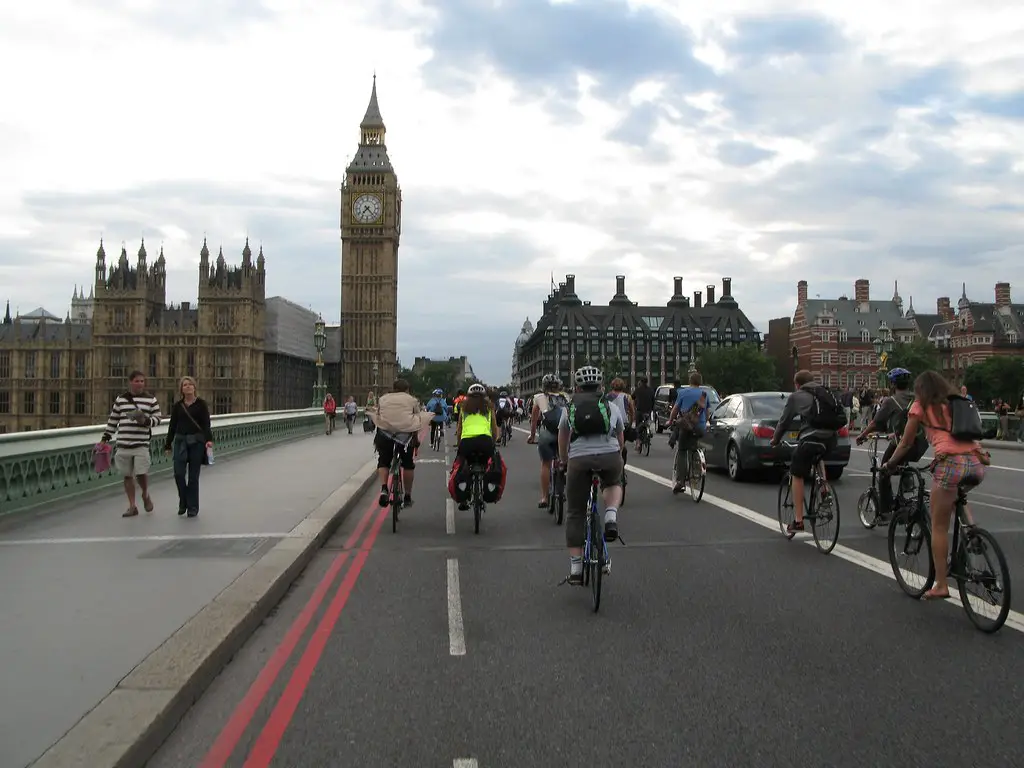
Planners and engineers within the transportation design industry have long debated the appropriate location, function, and character of city streets. Today, the debate over city streets stretches far beyond the curbs of the institutional design community. Participants include bicycling advocates, auto clubs, journalists, medical professionals, senior citizen groups, and non-profit organizations. If the infrastructure network of the United States was a free market, you might describe the role of the new players as a market correction. The old methods weren’t solving congestion or safety, so new methods are being explored. Let’s hope the trend of vigorous and public debate continues.
Follow the links embedded above and you will see several examples of what this “urbanism market” will demand in future cities. Several concepts have become household names for many of us design and planning wonks. Context sensitive solutions, sustainability, livability—at their core, each is a slightly different way of describing common sense principles. Or in lay terms, human-scale design.
Your next door neighbor may not fully understand livability, or if it has something to do with socialist conspiracy. But people do have basic pattern recognition skills. When a state department of transportation doubles the width of a street to relieve congestion and the result is more congestion…people notice. And they mock the planning and design community for it.
John Cruz of Urbanist Dispatch had this to say:
[People] want to be able to come out and play and be able to walk places instead of getting stuck in traffic and being completely auto dependent. People are doing what they’ve always done. It’s time to take a step back and let the market work.
After several years of transportation agencies and organizations lobbying for a connection between land uses and transportation planning, the industry is finally starting to walk the talk. I posit that the land use/transportation connection did not swell dramatically because of heightened awareness in the design community; it took a nationwide financial crisis. We haven’t been letting the market work.
State and local agencies can no longer afford to build their old wish list of transportation infrastructure that prioritized the fast-moving automobile over quality of life, personal freedom, return on investment, and public safety. They can, however, afford the paint and flowerpots needed to create bike lanes and pedestrian plazas.
Advancing common sense projects in cities does not have to be combative. Focus on common ground, such as financial return on investment. Regardless of a person’s habits in the voting booth, I will go out on a limb and suggest that voters care about financial stability. In the year 2012, the average person is far more critical of poor planning and wasteful spending by governments than ever before. So when you find yourself talking about federal transportation bills around the water cooler, offer some free publicity to places like West Palm Beach, FL or Chattanooga, TN or Louisville, KY or Golden, CO—cities that have seen dramatic economic revitalization due to careful planning and design of the transportation infrastructure.
Keep your eyes open for success stories and encourage the decision makers to let the market work.
Photo: infomatique